
Best glue for leather (repairs + leathercraft)
Brighter Picks guide
Best glue for leather (repairs + leathercraft)
As an Amazon Associate I earn from qualifying purchases.
Products in this guide


Check the model, seller and latest price on Amazon.
Leather is flexible, so the “best” glue is usually the one that stays flexible and matches your job: contact cement for structural seams, water-based cement for lower fumes, and urethane for boot/sole repairs.
Top picks
Barge All-Purpose TF Clear Cement — Best for strongest leather-to-leather bonds
A classic-style cement for leatherwork when you want a strong, flexible bond that holds up to movement.
Why it wins: It’s purpose-built as a flexible cement with a long enough work window to align pieces before pressing.
Pros
-
Strong, flexible bond for leather assemblies
-
Clear-drying option (nice for visible edges)
-
Published dry/open time helps planning
Cons
-
Contact cement is unforgiving after pressing (test-fit first)
-
Needs good ventilation (standard for many cements)
See reviews on Amazon.
Trade-offs / Who should skip: Skip if you need lots of repositioning or you’re doing delicate embellishments—this is more “commitment” than “craft glue.”
Scores: Performance 5/5 · Work time (open time) 4/5 · Ease of use 3/5 · Value 4/5
Renia Aquilim 315 — Best low-odor, water-based contact cement
If you want a contact-cement style bond but prefer water-based handling, this is a top contender in leather/footwear workflows.
Why it wins: It’s designed as a contact adhesive for leather/rubber work, with an open-time window called out in Renia docs.
Pros
-
Water-based contact adhesive (less solvent-style smell)
-
Documented open time for controlled assembly
-
Intended for leather and related materials in pro workflows
Cons
-
Open time varies by method/conditions (heat activation changes workflow)
-
Not ideal if your shop regularly freezes (can affect water-based adhesives)
See reviews on Amazon.
Trade-offs / Who should skip: If you’re bonding very oily/waxy leather surfaces, prep matters a lot—otherwise the bond can disappoint.
Scores: Performance 4/5 · Work time (open time) 4/5 · Ease of use 4/5 · Value 4/5
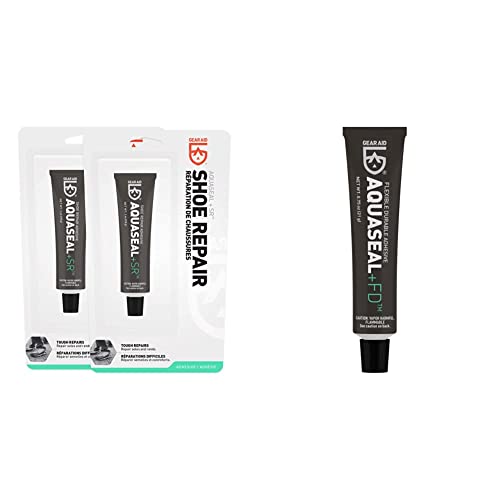
GEAR AID Aquaseal SR — Best for boots/soles and high-abrasion repairs
For peeling soles, toe caps, and “this needs to bend and survive abuse,” a urethane repair adhesive is often the right tool.
Why it wins: It’s made for footwear repairs and explicitly bonds to leather/suede and rubber, curing to a flexible, durable rubbery finish.

Pros
-
Designed to stay flexible as footwear bends
-
Bonds to leather/suede and common shoe materials
-
Waterproof + abrasion-resistant repair style
Cons
-
Not the best for flat, invisible seam laminations
-
Cure time is longer than “press-and-go” cements
See reviews on Amazon.
Trade-offs / Who should skip: Skip for fine leathercraft edge laminations (wallet layers, clean seam joins)—it’s more of a repair/build-up adhesive than a crisp assembly cement.
Scores: Performance 4/5 · Work time (open time) 2/5 · Ease of use 3/5 · Value 4/5
Fiebing’s Leathercraft Cement — Best for positioning before stitching
Great when you want to hold pieces in place (patterns, linings, seams) before you sew—more like a “leather-friendly craft cement” than a hardcore shoe cement.
Why it wins: Leather suppliers commonly position it as the “white glue” option versus contact cement for certain steps.

Pros
-
Handy for temporary hold/assembly steps before stitching
-
Typically easier cleanup than solvent cements (when fresh)
-
Good for light-duty bonding in mixed-material projects
Cons
-
Not the pick for wet/outdoor or sole-level stress
-
Open time not clearly published (couldn’t verify)
See reviews on Amazon.
Trade-offs / Who should skip: If the item will get soaked or flexed hard (shoe soles, belt laminations under load), choose a contact cement or urethane repair adhesive instead.
Scores: Performance 3/5 · Work time (open time) 3/5 · Ease of use 4/5 · Value 4/5
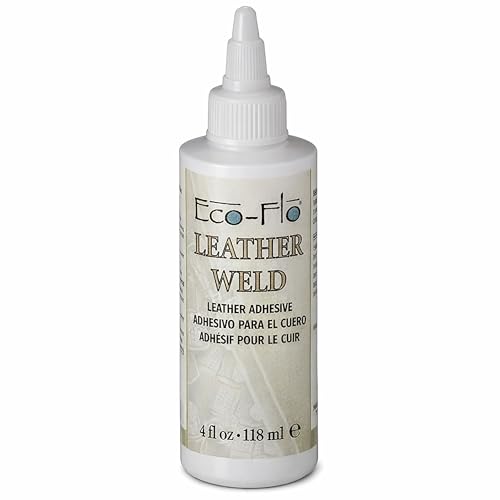
Eco-Flo Leather Weld — Best budget-friendly, water-based craft adhesive
A solid option for beginners who want a water-based, low-VOC adhesive for leather projects that aren’t brutally demanding.
Why it wins: Straightforward, water-based positioning from Tandy, with common leathercraft use cases.
Pros
-
Water-based and low VOC by product positioning
-
Easy workflow: apply thin layer and press while wet
-
Good for general leathercraft projects
Cons
-
Not ideal for “this must never peel” footwear repairs
-
Open time not clearly published (couldn’t verify)
See reviews on Amazon.
Trade-offs / Who should skip: If you’re making belts, structured bags, or anything that sees heat/sweat/outdoor abuse, step up to a contact cement (or a shoe repair urethane).
Scores: Performance 3/5 · Work time (open time) 3/5 · Ease of use 5/5 · Value 5/5
Quick compare
-
Strongest leathercraft seam bonds: Barge TF Clear Cement
-
Water-based contact cement (lower fumes): Renia Aquilim 315
-
Boot soles/toe repairs: GEAR AID Aquaseal SR
-
Hold it in place before stitching: Fiebing’s Leathercraft Cement
-
Beginner water-based craft glue: Eco-Flo Leather Weld
FAQs
What glue do cobblers use for leather?
Often contact cements for bonding layers and urethane repair adhesives for high-wear sole areas—because both stay flexible and hold up to movement.
Is super glue good for leather?
Usually not for main seams: it can cure rigid and crack as leather flexes. It’s better for tiny, non-flexing fixes, not structural leatherwork.
Which is best for a torn leather bag seam?
If it’s a structural seam, a contact cement (Barge or Renia) is typically the better match than a basic craft glue—then stitch if the seam takes load.
Which is best for a peeling boot sole?
A shoe/boot repair urethane (Aquaseal SR) is made for that kind of flex + abrasion + water exposure.