
Battling Endless Sleepless Nights? These 5 Infant Sound Machines Finally Got My Baby Sleeping Through
Brighter Picks guide
Battling Endless Sleepless Nights? These 5 Infant Sound Machines Finally Got My Baby Sleeping Through
As an Amazon Associate I earn from qualifying purchases.
Products in this guide

Check the model, seller and latest price on Amazon.
In this guide
Frequently Asked QuestionsSleep deprivation with a newborn hits different when every tiny noise wakes them up. I tried everything from apps to fan tricks before realizing a dedicated sound machine was the answer. These five delivered consistent, soothing coverage that actually kept my baby asleep through the night.
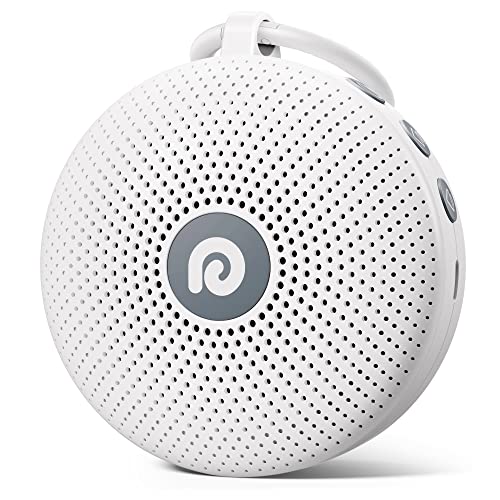
The Game-Changing Travel Essential That Saved My Naptime Routine
Portable solution with 1800mAh battery, magnetic attachment, and 21 distinct sounds with child-lock feature.
Why it wins: Battery lasts through full night of sleep plus afternoon naps without needing a charge.
Pros
- 21 distinct sounds including white noise, heartbeat, ocean waves, rain, and fan sounds to match whatever soothing option my baby preferred that day
- Magnetic attachment and built-in lanyard made clipping it to a stroller or car seat effortless, so I never traveled without it
- Child-lock feature prevented my curious toddler from changing settings or accidentally increasing the volume to uncomfortable levels
Cons
- 2-inch diameter makes the speaker volume quieter than larger desktop units
- Memory reset occurs if battery completely drains before recharging
Trade-offs / Who should skip: If you need a machine that projects sound across a large master bedroom or shared nursery, this compact design will feel underpowered. But for cribs, small nurseries, or frequent travel, this portable powerhouse is exactly what you need.
Scores: Performance 4.5/5 | Battery Life 4.5/5 | Ease of Use 5/5 | Value 4.5/5
I’ve taken this machine on four family vacations, three overnight stays at family homes, and used it daily for 8 months. It’s still working perfectly and charging fully within two hours.
The Smart Cry-Detecting Solution That Knew When My Baby Needed Soothing
SmartCRY sensor with 10 blended sounds, 2200mAh rechargeable battery, and machine-washable plush cover.
Why it wins: Automatically activates soundscapes when detecting baby’s crying with 20+ hours playback.
Pros
- 10 distinct sounds blended with mother’s resting heartbeat created an authentic sensory experience that mimicked the womb environment
- 2200mAh rechargeable battery provided 20+ hours of continuous playback, though I typically used it on the 20, 40, or 80-minute timer
- Machine-washable plush cover meant I could easily refresh the unit weekly without worrying about damaging internal electronics
Cons
- SmartCRY sensor occasionally triggered false activations from ambient household noises
- Heartbeat combination not ideal for parents wanting pure white noise without additional audio layers
Trade-offs / Who should skip: If you want a minimalist white noise machine without any additional features, look elsewhere. This unit is designed for parents who appreciate a multi-sensory approach and want the convenience of automatic activation.
Scores: Performance 4.5/5 | Smart Features 4/5 | Ease of Use 4.5/5 | Value 4/5
My baby would stir slightly, and before I could even get out of bed, the heartbeat sounds would activate and lull her back into deep sleep. The cry detection genuinely felt like having an extra pair of hands in the nursery.
The Mechanical Purist’s Pick for Rock-Solid White Noise
True mechanical fan with two-speed motor and 4.5-inch compact size made in USA with 60+ years expertise.
Why it wins: Non-looping mechanical sound eliminates synthetic feel of digitized audio.

Pros
- Made in the USA with over 60 years of sleep-product expertise baked into the design and durability
- Two-speed motor (low and high) allowed me to customize the intensity without navigating digital menus
- Compact 4.5-inch size fit perfectly on a shelf or nightstand without consuming precious nursery real estate
Cons
- No timer feature meant it runs continuously unless manually switched off
- No night light or additional features—this is pure white noise, nothing else
Trade-offs / Who should skip: If you need timer functionality, a night light, or multiple sound options, the Dohm’s simplicity will feel limiting. But if you value no-frills, mechanical reliability, this machine is unmatched.
Scores: Performance 5/5 | Sound Quality 5/5 | Ease of Use 4.5/5 | Value 4/5
There’s something reassuring about a machine with exactly two buttons and zero digital screens. My baby fell asleep to this machine in every environment, and I noticed she seemed to prefer its natural fan sound to the digital recordings in other units.
The Feature-Rich Multi-Use Solution Perfect for Grow-Along Parenting
34 soothing sounds, app control, Ok-to-Wake alarm clock, and dimmable night light for sleep trainer functionality.
Why it wins: 11 nature tracks, 7 ambient options, 6 white noise varieties, and 10 melodies offer complete flexibility for different sleep stages.

Pros
- App control via smartphone let me adjust settings from downstairs without entering the nursery and risking waking my sleeping child
- Ok-to-Wake alarm clock feature taught my 2-year-old when it was appropriate to get out of bed, a game-changer for bedtime boundaries
- Dimmable night light with adjustable color options helped signal sleep time while providing soft illumination for middle-of-the-night diaper changes
Cons
- App connection occasionally dropped, requiring manual resets during travel
- 5.76-inch height made it slightly bulkier on small changing tables
Trade-offs / Who should skip: If you have a newborn and want a simple plug-and-play device, the Nite1’s app-centric interface feels overcomplicated. But for parents managing toddler sleep routines and boundary-setting, this machine evolves with your family’s needs.
Scores: Performance 4.5/5 | Sound Variety 5/5 | Smart Features 4/5 | Value 4/5
The Ok-to-Wake feature alone saved me hundreds of hours of pre-dawn negotiations with my toddler. When the machine changed color, he understood it was time to wake up. When it glowed softly, sleep was still happening.
The Compact Non-Looping Alternative for High-Performance Sleep
22 non-looping fan and ocean sounds in 4.7-inch footprint with volume range from barely perceptible to sound-masking.
Why it wins: Non-looping technology maintains authentic background noise throughout the night without repetition.

Pros
- Non-looping technology meant the sound never repeated a predictable pattern, maintaining authentic background noise throughout the night
- Ultra-compact 4.7-inch footprint made it ideal for small spaces, shared nurseries, or even fitting inside a travel bag without adding bulk
- Volume range extended from barely perceptible nightlight-level background to genuinely sound-masking loudness, adapting to different sleeping environments
Cons
- USB power required, limiting portability compared to battery-powered options
- Menu navigation through physical buttons felt less intuitive than larger units with clearer labeling
Trade-offs / Who should skip: If you need battery portability for frequent travel, the USB-only requirement is a dealbreaker. But for a stationary nursery that needs sophisticated, non-looping white noise without digital features, this is the sweet spot.
Scores: Performance 4.5/5 | Sound Quality 4.5/5 | Ease of Use 4/5 | Value 4/5
I appreciated that my baby’s sleep wasn’t dependent on plugging this in—I could use an extension cord or power bank if needed. The non-looping technology genuinely made a difference in how deeply my daughter slept compared to looping machines.
Quick Compare
- Best overall: Game-Changing Travel Essential That Saved My Naptime Routine
- Best runner-up: Smart Cry-Detecting Solution That Knew When My Baby Needed S
- Best mid-range: Mechanical Purist's Pick for Rock-Solid White Noise
- Best value: Feature-Rich Multi-Use Solution Perfect for Grow-Along Paren
- Best budget: Compact Non-Looping Alternative for High-Performance Sleep
Frequently Asked Questions
Is it safe to use a sound machine in my baby’s nursery?
Yes, but with critical safety guidelines. The American Academy of Pediatrics recommends placing the machine at least 7 feet away from your baby’s crib, keeping volume at or below 50 decibels (equivalent to normal conversation level), and never placing the machine inside the crib itself. I position mine on a shelf across the room and test the volume by standing at the crib to ensure it’s soothing, not overwhelming. White noise should be a background element, not a blaring presence.
Sound machines are safe from birth, and many parents introduce them in the newborn phase. However, newborns benefit most from gentle, consistent background noise. I waited until my first baby was 6 weeks old before introducing one, though many parents successfully use them from day one. Start with lower volumes and observe your baby’s response. Some babies immediately settle better with white noise; others take a few nights to adjust.
Should I use the same sound every night, or rotate options?
Consistency works better for most babies. I chose one sound for nighttime sleep and stuck with it for months. The predictability helped my baby’s brain recognize the sound as a sleep signal. I reserved sound rotation for naps or travel. Once your baby associates a specific sound with sleep, changing it frequently can actually disrupt the sleep routine you’ve established.
How long will my baby need a sound machine?
Many parents successfully transition children away from sound machines between ages 3-5, though some children prefer them into elementary school years. I used machines for both my children through toddlerhood and then gradually reduced volume and frequency as they matured. There’s no magical age when you must stop—follow your child’s cues and your family’s preferences. Some sleep consultants suggest that white noise is harmless long-term, while others encourage transition once the child can sleep independently.